Repeated expression
The frown, the brow lift, and the squint etch a line in the same place for years. Early on, the line disappears when the face relaxes.
Houston condition plan
Forehead Lines, Frown Lines, and Crow's Feet
Wrinkles get booked as one treatment and then disappoint, because a line from raising your eyebrows is not the same problem as a fold from a cheek that has lost support. One softens when the muscle rests. The other stays put. The plan starts by watching the line move.
Medically reviewed by Dr. Mark Khorsandi, founder and medical director of ZO Skin Centre Houston · Last reviewed October 2026. This page is for education and does not replace a personal consultation.
The short version
Movement lines on the forehead, between the brows, and at the eyes are a wrinkle-relaxer conversation.
Lines that stay etched after the muscle is quiet need skin treatments: peels or microneedling.
Smile-line folds are often volume loss. Filler there is a different decision from a forehead line.
A frozen look is a dosing choice. The consultation is where movement gets kept on purpose.
Treatments that can help
These are the in-office options for this concern. The role is the decision. The treatment page covers the procedure.
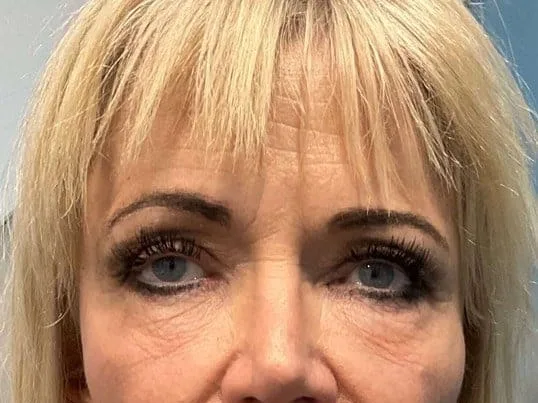
Photos are clinic patients, showing the concern. They are not the result.
Softens lines made by movement: forehead, frown, and crow's feet.
The line fades when the face is at rest, or it is just starting to etch.
For fine lines that stay stamped in the skin after the muscle is relaxed.
Expression lines are already treated and the etched texture remains.
Surface lines that come with dullness and sun texture, not deep folds.
The change is fine and superficial, and the skin can take a peel series.
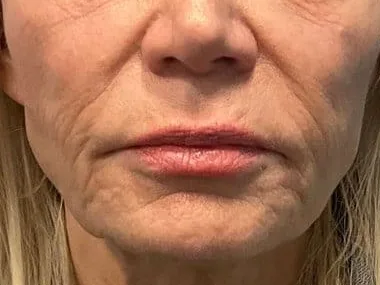
Folds from lost support, such as smile lines, are a volume problem.
The line is a fold at rest, not a forehead crease from raising the brows.
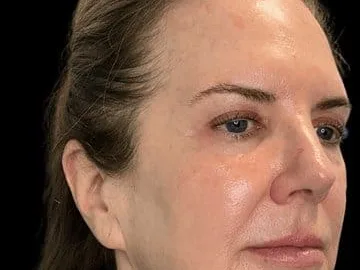
Sculptra restores hollow cheeks and temples. It is not a line eraser.
The face looks deflated rather than lined. That is the volume-loss plan.
What's actually happening
A wrinkle is a record of either motion, thinning skin, or missing support. Forehead lines, frown lines, and crow's feet are usually motion, and they respond to a wrinkle relaxer while some expression is still allowed. Fine lines across the cheek are often sun and turnover. A fold from the nose to the mouth is frequently a cheek that deflated. Treating all three with the same syringe is how faces start to look overfilled in one area and unchanged in another.
The frown, the brow lift, and the squint etch a line in the same place for years. Early on, the line disappears when the face relaxes.
Houston UV plus thinner skin turns fine lines into a surface texture problem. Relaxing a muscle does not resurface that.
Cheeks and temples lose support, and the skin folds over the gap. Those lines are a volume-loss plan, not a forehead plan.
Papery, finely wrinkled skin on the neck, chest, or under the eyes is thin skin. It needs collagen and barrier work, not a stronger relaxer dose.
Why the usual fixes fail
The expensive version of this mistake is filling a line that was made by a muscle, or relaxing a fold that was made by missing cheek support. Both can be done skillfully and still look wrong.
Filler in the forehead or crow's feet is rarely the tool. The face gets heavier where it needed quieter movement.
A dose aimed at zero movement. The line is gone and the face no longer matches the person. That is a planning failure, not a requirement of treatment.
Moisturizer can make a fine line look softer for a few hours. It does not change a frown line that has been folding in the same place for a decade.
How we treat it
Each line gets a cause. Movement lines go to a wrinkle relaxer, with the product and dose chosen for the muscle and for how much expression should remain. Etched texture goes to peels or microneedling after the motion is quieter. Folds from deflation go to the volume-loss plan. Crepey skin is not treated as a wrinkle.
Forehead, frown, and crow's feet are assessed in motion and at rest. A line that vanishes at rest is a wrinkle relaxer candidate. A line that stays is already etched.
BOTOX®, Dysport®, Xeomin, or Daxxify is selected for onset, duration, and the look you want to keep. The product page for each one lives with the treatment. This page is the decision between them and everything that is not a relaxer.
Etched fine lines can move to chemical peels or microneedling once the folding has calmed down.
Smile lines and a flattened cheek belong on the volume loss page. Papery skin belongs on the crepey skin page.
A wrinkle relaxer is judged at the follow-up, usually within two weeks, and wears off over a few months depending on the product and the muscle. Skin-quality lines from peels or needling change over 8 to 12 weeks. Deep folds from volume loss do not move on a relaxer timeline at all.
"The useful part was learning which lines were movement and which ones were the cheek underneath."
Go deeper
These three are the core wrinkle-relaxer map. The forehead lifts the brows, so a heavy dose can drop the brow if the dose ignores that. The frown, between the brows, is the line people read as anger or concentration. Crow's feet are the squint, and they are often paired with genuine sun texture that a relaxer will not sand away.
The injectables page compares the wrinkle-relaxer options. This page is for deciding whether a relaxer is the right category before you pick a brand.
If the line disappears when you stop moving, treatment is aimed at the muscle. If it is still there while you are still, the skin has a crease of its own. Many people have both: the relaxer stops the line from getting deeper, and peels or microneedling work on the crease that is already there. Doing only the second, while the muscle keeps folding the skin every day, is why some texture plans look like they failed.
Dermal filler belongs in folds and hollows: smile lines, a flat cheek, a lip that lost definition. It is a poor tool for forehead lines and for crow's feet. Sculptra® is the gradual version of that volume conversation, and it is not a substitute for a frown-line treatment. If the face looks older because it looks emptier, start with volume loss instead of adding more units.
What it costs
Wrinkle-relaxer pricing depends on the product and how many areas are treated. Peels, microneedling, and filler are quoted separately because they solve different lines. The consultation is complimentary when booked through our Houston clinic booking flow. You leave with a written plan either way.
Book NowRelated plan paths
Why ZO Houston
A ZO Skin Centre is different because the visit starts with a plan, not a menu. Your provider reviews skin behavior, tolerance, products, timing, and goals before recommending treatment. We use physician-grade ZO protocols, document the plan clearly, and tell you no when a service is not the best fit.
Forehead lines from raising the brows are usually treated with a wrinkle relaxer, dosed so the brow can still move. If the line remains while the face is at rest, skin treatments such as peels or microneedling may be added later. Filler is not the forehead tool.
Yes. The dose is chosen around the muscles you actually use and the movement you want to keep. A frozen forehead is a choice, not the only result a wrinkle relaxer can produce.
No. Frown lines sit between the brows and read as tension. Forehead lines run across the brow and come from lifting it. They are different muscles, and treating one does not fix the other.
Movement lines need a relaxer. Folds from lost cheek or lip support need filler or a biostimulator. A lot of faces need one of each, in different places. The consultation maps that instead of using one product everywhere.
Relaxers fade over a few months. The exact window depends on the product, the muscle, and your metabolism. Collagen treatments for etched lines build more slowly, over about 8 to 12 weeks, and also need maintenance.
Ready for your complimentary consultation?
Bring the line that bothers you. The first job is to see whether it moves.